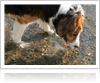
As the month of May dawns, children and college students are staring at their clocks and calendars. Graduation and the end of the school year are fast approaching, and many people are counting down the days until a summer vacation. Many families and friends will spend time fishing, camping, or roasting s'mores near a mountain lake, or wakeboarding and waterskiing on a boat. Naturally, you will want to take your pets along to the lake this summer, but when you do so there are some things you need to know. Lakes can contain a cacophony of water parasites and fungi that may ravage your pet's insides if they are ingested.
Dogs are prone to contract intestinal diseases like giardia and cryptosporidia from the parasites in freshwater lakes and rivers. Normally these dangerous worms are found in animal feces that were deposited into the lake. When your dog laps up some of the infected water, he or she can catch the parasites. Admittedly, the chances of catching this parasite in an average freshwater lake are pretty slim. Places with higher amounts of wildlife activity carry a higher danger.
Parasites that cause intestinal diseases are not the only concern that lies underneath the lake water. Lots of bugs and algae concentrate in stagnant water. One of the greatest dangers in these stagnant water sources is blue-green algae. In 2007, over 40 dogs fell ill to these toxic algae. This was in part because of a drought. Since there was no rain to replace the water in Minnesota lakes that year, the blue-green algae developed and the water remained unmoved. A slight breeze can push the blooms of blue-green algae towards the shore, where dogs are likely to lap up a refreshing drink.
At least four dogs perished that year from consuming the dangerous substance. The algae produce toxins in the dog's internal organs and contaminate the stomach. When a pup drinks in a whole gulp of the substance, he may succumb to it immediately. In smaller doses, the dog may be fine for a few hours before being affected. Often your pet will become weak, and act mentally unstable after consuming this dangerous fungus. He or she may also suffer from muscle tremors, convulsions, labored breathing, difficulty moving, and a bloody diarrhea. These are all results of the nervous system toxins and liver toxins, which were stimulated by the algae.
If your dog contracts the symptoms of blue-green algae poisoning, then you must call a vet immediately. In some cases the dog can be issued activated charcoal to bind the toxins and cause the dog to vomit up the algae. Other stomach pumping techniques may also rid the algae from your pet's system. Atropine has also saved some dogs from this saddening death. Sadly, even if your pet does survive blue-green algae poisoning, he will probably always have an ultra-sensitivity to light, chronic low weight problems, and a failure to thrive. Many dogs never fully recover.
The best way to protect your dog from this awful poison is to keep him or her from drinking the water in the lake. Always bring along a dog bowl and a supply of fresh water when taking your dog to the lake. Reprimand him or her if he or she decides to take a drink from the pond. Watch for a blue-green scum on the surface of the lake, and be especially conscious of stagnant water sources. By exercising caution, you will be able to save your pet from a dangerous death from a lake algae or parasite.